
Interior House Painting in Melbourne
Interior painters for whole-home repaints, single rooms and post-renovation finishing — walls, ceilings, doors, skirting boards and architraves prepared properly and finished cleanly.
5.0Google rating · Serving Melbourne since 2016
What interior painting actually involves
Inside a house, the paint is the least of it. Almost everything you notice in a finished room — flat walls, sharp cut lines, trims without ridges, a ceiling with no roller shadows — comes from what happened before the topcoat. That is where our time goes on interior jobs across Melbourne.
It also means living with the work. We plan the order of rooms around you, keep furniture and floors protected the whole way through, and leave the house tidy each afternoon instead of at the end of the week.
Walls, ceilings, doors and trims
Walls
Washable low-sheen and matt finishes over plasterboard, plaster and lined walls. Patched, sealed and rolled evenly so joins and repairs disappear under the light.
Ceilings
Flat ceiling white that hides roller marks, with cornices, vents and pressed-metal detail cut in by hand rather than sprayed over.
Doors and door frames
Doors, jambs and stops sanded between coats and finished in enamel or waterborne enamel so they stay hard, cleanable and non-sticky.
Skirting boards, architraves and trims
Gaps caulked to walls, old drips and brush ridges sanded flat, and straight lines cut where trim meets wall and floor.
Surface preparation, cracks and patching
Previously painted surfaces
Older interior walls carry a history — hooks, scuffs, patch repairs, glossy enamel on trims, and sometimes a coat that was rolled straight over grime. Those surfaces are washed, sanded to give the new paint something to grip, and spot-primed where filler, stains or bare patches would otherwise flash through. Our wall preparation guide walks through the full sequence, and Interior Plaster Cracks & Ceiling Repair covers the crack and plaster repair side in detail.
New plaster and renovations
Fresh plasterboard is thirsty and uneven in absorbency. It gets a proper sealer coat first, set joints checked and sanded, and internal corners cut straight. Where a room is part new and part original, both sides are brought to the same finish before any colour goes on.
Interior Wall Crack Repairs & Repainting
These genuine before and after photos show visible cracks above a fireplace, then the repaired and repainted wall with an even finish.
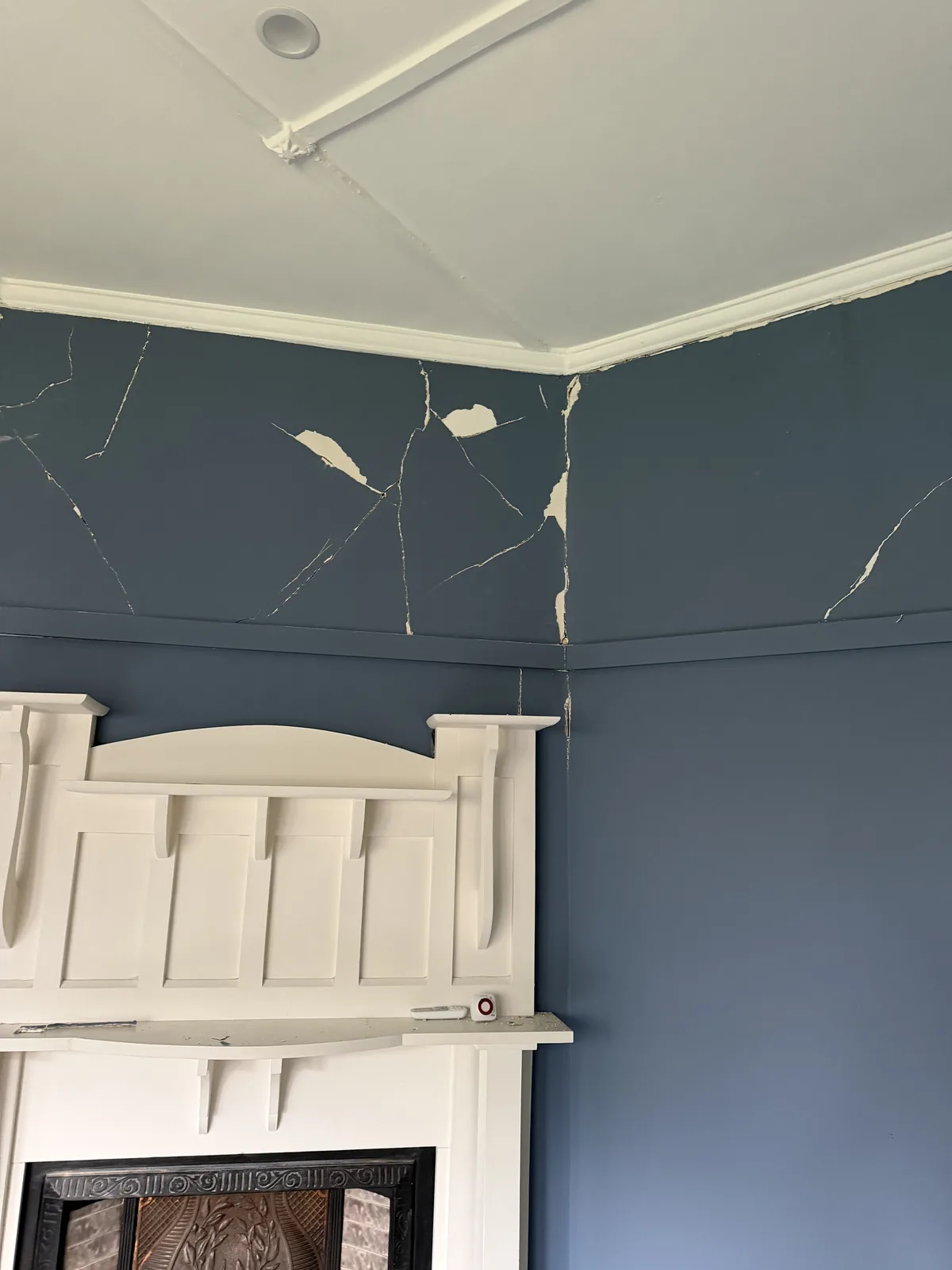
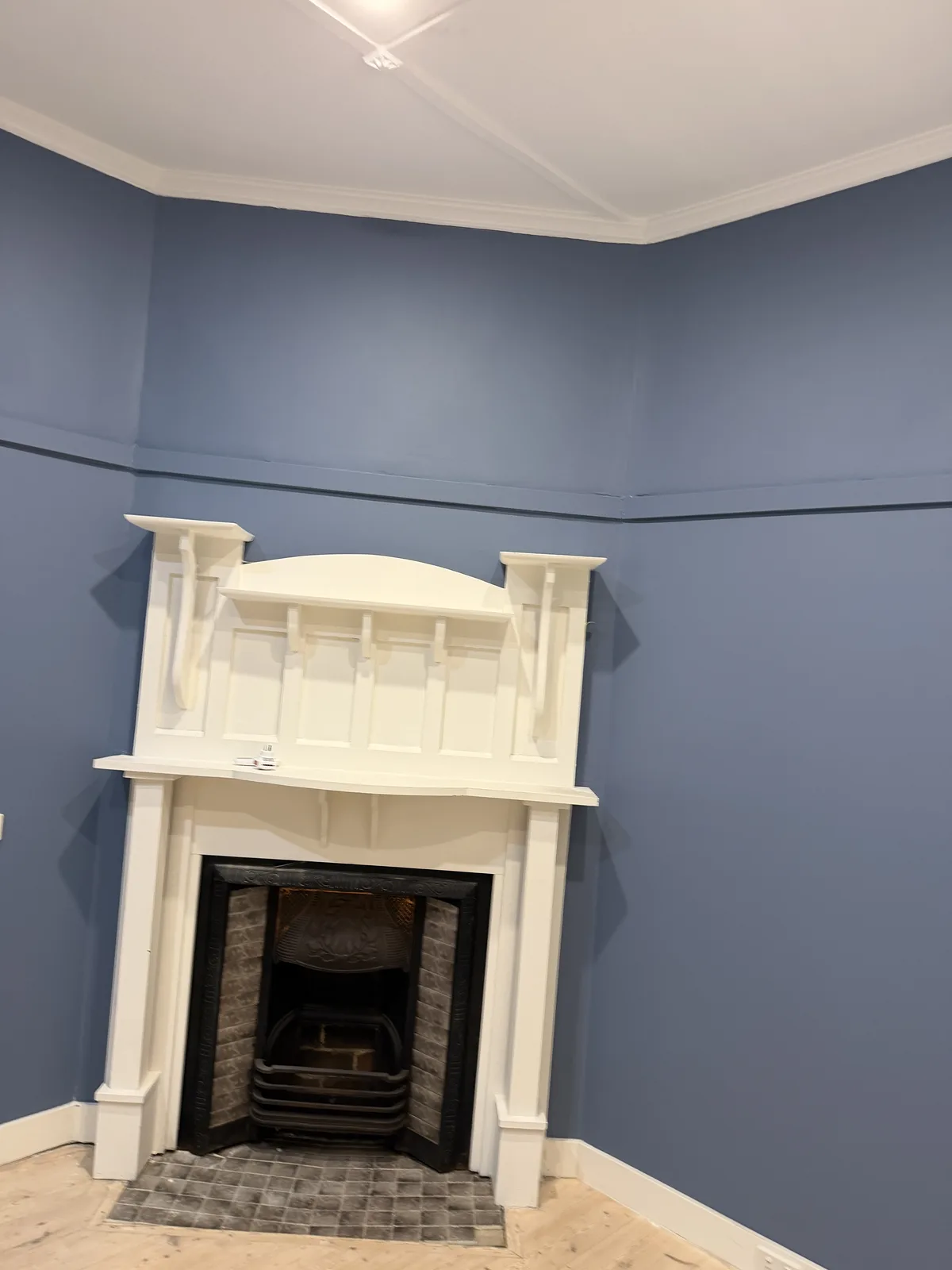
- 01Move and cover: furniture centred and wrapped, floors covered edge to edge, fittings removed or masked.
- 02Wash down high-traffic areas, kitchens and bathrooms so paint bonds instead of sitting on grease.
- 03Rake out and fill cracks, dents, old fixing holes and damaged corners.
- 04Sand filler flush, then dust off every surface before a coat goes near it.
- 05Spot-prime patches, stains and water marks so they do not flash through the topcoat.
- 06Seal new plaster with a plasterboard sealer before colour coats.
- 07Two finish coats to walls, ceilings and woodwork unless the surface needs more.
- 08Reinstate fittings, vacuum through and walk the job with you room by room.
Protecting floors, furniture and the rest of your home
An interior repaint touches every room you live in. Protection is planned before a lid comes off.
- Floors covered wall to wall — timber, tile and carpet alike
- Furniture moved to the centre of the room and wrapped
- Power points, switches, handles and hardware removed or masked
- Low-odour interior paints so rooms are usable again quickly
- Daily clean-down, rubbish removed, brushes washed off site

Interior painters across Melbourne
We work from Sunshine West right across the inner west, inner city and beyond. Some areas have their own page with local detail on the housing we paint there.
Interior painting FAQs
- Can we stay in the house while you paint inside?
- Most Melbourne homeowners do. We work room by room, keep a clear path through the house, use low-odour interior paints and pack down each afternoon so bedrooms and kitchens stay usable.
- Do the cracks in my walls need repairing before painting?
- Hairline settlement cracks are raked out, filled and sanded as part of standard preparation. Wider or recurring cracks, water damage or failed plaster are flagged at quote stage so you can decide whether a plasterer should look at them first.
- How long should I wait before painting new plaster?
- New plasterboard and set walls need to be dry and the set joints fully cured before sealing. Once ready, new plaster gets a dedicated sealer coat rather than a topcoat, otherwise the joins and sheet faces absorb differently and show through.
- Can you paint over dark or previously painted walls?
- Yes. Previously painted surfaces are washed, sanded to key the existing coating and spot-primed where needed. Strong colours going light usually need an extra coat, and we allow for that in the quote rather than adding it later.
- Do you paint ceilings and cornices separately from walls?
- They are quoted as separate line items so you can choose. Doing ceilings at the same time as walls is generally the cleanest result, because cut lines are made once instead of being worked around later.
Free quote for your interior repaint
Tell us which rooms you want done and we'll come out, measure up and send a fixed written price.
- Free, no-obligation on-site measure
- Fixed written quote, itemised room by room
- $20M public liability insurance — certificate of currency available on request
- Flexible start dates around your household